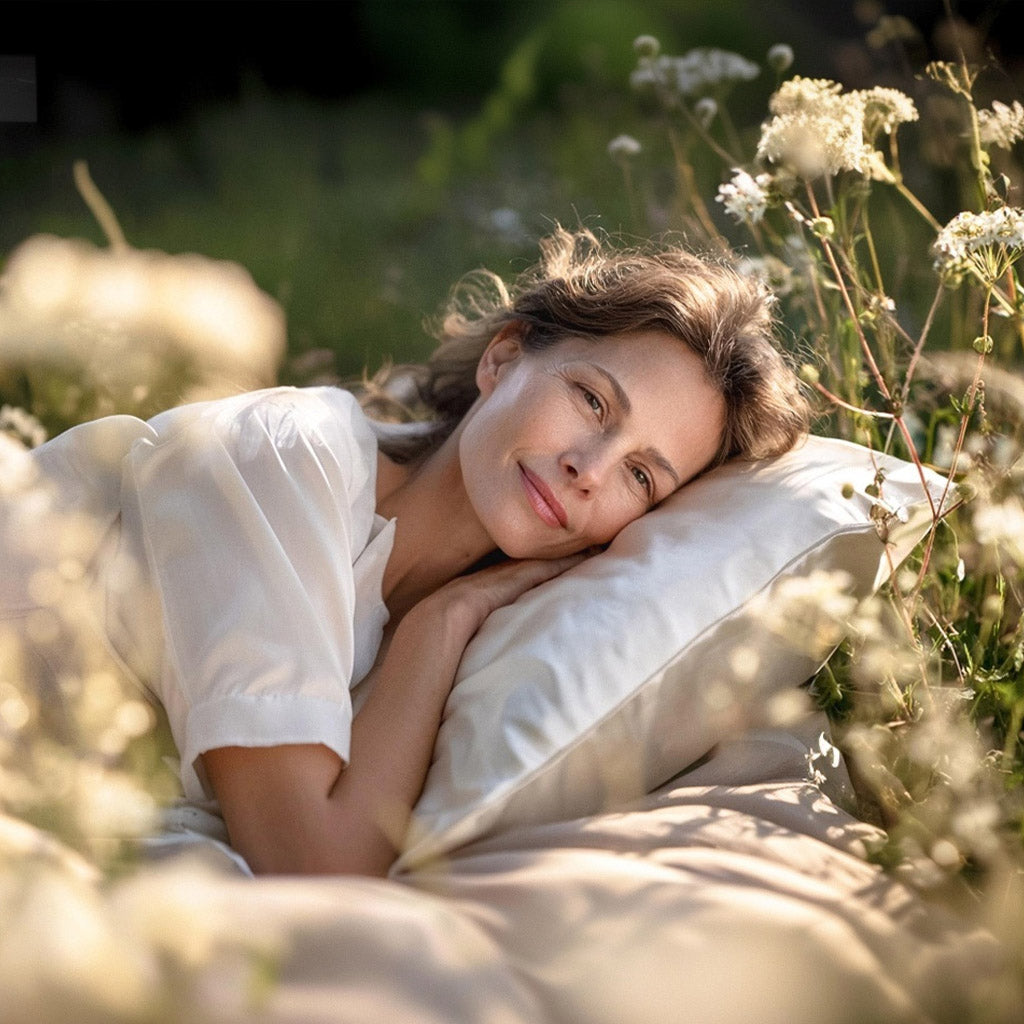
Image Source: Eversilk
It’s that tricky time of year again—seasons are changing, and your skin and hair are feeling it. Suddenly, your once-glowy complexion looks dull, your hair is frizzier than ever, and even your nightly routine feels like a battle against dryness and irritation. You slather on moisturizers, swap shampoos, and still wake up with bedhead that looks like a small tornado hit it.
But what if there was a simple, effortless way to help your skin and hair adjust to the seasonal shift while you sleep?
Many dermatologists actually suggest paying attention to what you sleep on—not just what you put on your face. Board‑certified dermatologists note that silk pillowcases offer a smoother, more breathable surface that reduces friction against the skin and hair, helping preserve moisture rather than pulling it away like rougher fabrics can. This makes them a smart choice during seasonal transitions, when hydration and gentle care are especially important.
Why Your Skin and Hair Struggle During Seasonal Changes
As the seasons shift, the changing temperature and humidity levels can have a surprisingly big impact on your skin and hair. Different seasons bring different environmental challenges, and your usual skincare and haircare routine might not be enough to keep up.
In colder months like fall and winter, the air tends to be drier and colder, which can strip moisture from your skin and hair. Skin loses hydration more quickly, leading to tightness, flakiness, and irritation. Hair can become brittle, static-prone, or frizzy because the dry air draws water out of the strands.
In contrast, warmer seasons bring higher humidity and heat. While this might feel refreshing at first, excess moisture in the air can cause your hair to become frizzy and unmanageable, and your skin to feel sticky or prone to breakouts.
Here’s a simple seasonal breakdown to show how environmental changes can affect your hair and skin (and why you might want a night‑time care upgrade like a silk pillowcase:
| Season | Typical Conditions | Common Skin Effects | Common Hair Effects |
|---|---|---|---|
| Spring | Increasing humidity, fluctuating temps | Sensitivity, irritation, dryness/sensitivity from pollen and temp swings | Frizz, flyaways from moisture changes, allergens on scalp |
| Summer | High heat + high humidity | Sweat + oil = clogged pores, breakouts | Frizz + humidity‑induced volume, sun damage |
| Fall | Cooler, drier air | Moisture loss → tightness, flakiness | Dry strands, scalp irritation |
| Winter | Cold + very low humidity | Dry, flaky, cracked skin; barrier weakening | Static, dryness, breakage |
Why This Matters
When humidity drops and temperatures cool, your skin’s natural barrier loses moisture faster than it can replenish itself. This can lead to dryness, irritation, or even exacerbate sensitive conditions like eczema.
Similarly, hair loses its natural oils in dry conditions, making it more prone to frizz, breakage, and static. High humidity, on the other hand, opens hair cuticles and leads to puffiness or frizz as water molecules penetrate the hair shaft.
Understanding these seasonal changes helps explain why your skin and hair might misbehave even if your skincare or haircare routine hasn’t changed. And it’s also why thoughtful upgrades to your nightly routine—like using a silk pillowcase—can make a noticeable difference across seasons.
How a Silk Pillowcase Can Help

Image Source: Eversilk
Switching to a silk pillowcase may seem like a small change, but it can have big, visible benefits for your skin and hair—especially during seasonal transitions. Here’s a detailed look at what it does and why it matters:
1. Low-Friction Surface
Silk’s smooth texture glides against your hair and skin, unlike cotton or linen, which can tug and pull while you sleep.
- For hair: Fewer tangles, less breakage, and reduced frizz. Imagine waking up with your strands still sleek instead of knotted into a mini bird’s nest.
- For skin: Reduced friction means fewer “sleep lines” and creases forming overnight, helping prevent early wrinkle formation and irritation.
2. Moisture Retention
Silk doesn’t soak up water and natural oils the way cotton does.
- For skin: Moisture stays on the surface, keeping your face hydrated and plump even if the air is dry.
- For hair: Natural oils remain in the hair shaft, reducing dryness and split ends—perfect for those flaky winter mornings or frizz-prone summer nights.
3. Temperature Regulation
Silk naturally responds to heat, helping maintain a comfortable temperature all night long.
- Cooler nights: Keeps your scalp and skin from overheating, preventing night sweats.
- Colder nights: Provides a gentle warmth, reducing chills without needing heavy blankets.
- Result: More restful sleep, which indirectly improves skin regeneration and hair strength.
4. Gentle on Sensitive or Acne-Prone Skin
Silk is hypoallergenic and naturally smooth, making it ideal for anyone with sensitive, reactive, or acne-prone skin.
- Reduces redness and irritation caused by friction.
- Helps prevent acne aggravation from fabrics that trap bacteria or absorb skin oils excessively.
- Supports healthier skin recovery overnight, especially during seasonal flare-ups.
The Bottom Line
While you’re sleeping, silk is quietly working to:
- Keep your hair shiny, frizz-free, and strong.
- Maintain your skin’s moisture, smoothness, and overall health.
- Regulate temperature for a comfortable, uninterrupted night of sleep.
In other words, it’s a nightly beauty and comfort upgrade that works while you rest, and the results are cumulative—consistent use over weeks can make hair more manageable and skin visibly softer and plumper.
Simple Nighttime Rituals to Maximize Seasonal Benefits
Even the best silk pillowcase works best when paired with a few thoughtful habits 🌙:
- Flip it wisely: Try rotating or flipping your pillowcase mid-week to keep it fresh and ensure both sides are always smooth against your skin and hair.
- Light nightly touch-ups: A tiny dab of serum on dry ends or a quick spritz of hydrating mist can complement the silk, without adding a full-blown routine. 💧
- Protect from buildup: Keep your hair products minimal at night—silk works best on clean hair to prevent oils or styling residue from interfering.
- Stick with it: Even small nightly steps consistently add up, helping your hair stay sleek and your skin soft across seasonal changes.
No complicated rituals required—just a few mindful tweaks, and your silk pillowcase does the rest.p.
Conclusion
Changing seasons don’t have to mean dull skin, frizz, or discomfort. A silk pillowcase is a quiet, effortless way to give your hair and skin the support they need during seasonal transitions. It’s simple, luxurious, and genuinely effective—so you can wake up looking refreshed, feeling comfortable, and ready to face the day.
Sometimes, the smallest changes make the biggest difference—and a silk pillowcase might just be your ultimate seasonal secret weapon.
FAQ
Will a silk pillowcase really help during seasonal changes?
Yes! Silk reduces friction, retains moisture, and regulates temperature, helping your skin and hair adjust to changing seasons without extra effort.
Is it suitable for sensitive or acne-prone skin?
Absolutely. Silk’s soft, gentle surface minimizes irritation and friction, making it ideal for sensitive or acne-prone skin during seasonal transitions.
How do I care for a silk pillowcase during winter or dry months?
Simply hand-wash or machine wash on a gentle cycle with cold water and mild detergent. Air dry for best results. No harsh chemicals needed—silk is surprisingly low-maintenance!
Can it really improve hair and skin overnight?
Silk can’t perform miracles, but its low-friction, moisture-retaining, and temperature-regulating properties help reduce hair breakage, frizz, and skin sleep lines over time. Regular use shows noticeable results.