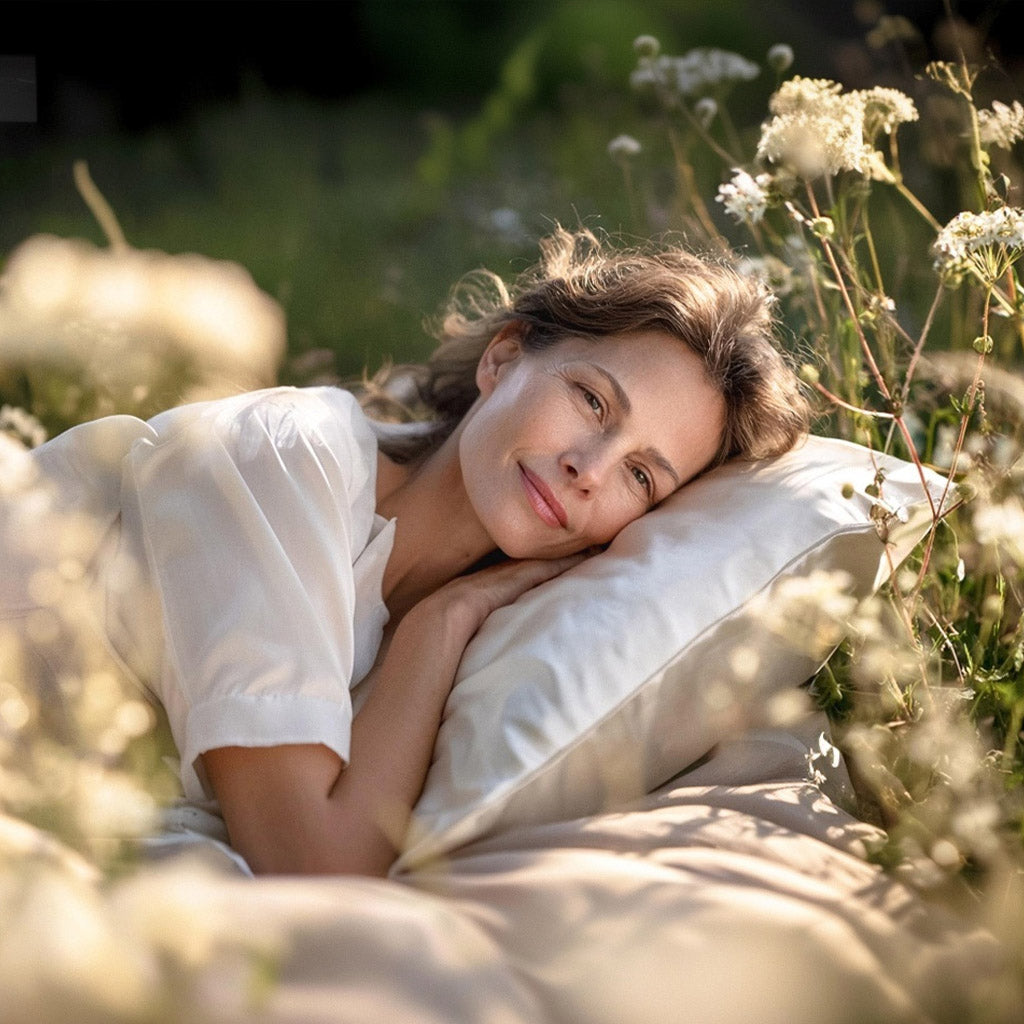
Image Source: Eversilk
When we think about skin and hair care, most of the focus goes to what we apply before bed—cleansers, serums, moisturizers, or hair treatments. But there’s one part of the nighttime routine that rarely gets the same attention: what your skin and hair are resting on for eight hours straight.
During sleep, your face and hair are exposed to constant friction, pressure, and moisture transfer. Night after night, these small interactions can add up, contributing to irritation, dehydration, hair breakage, and overall stress on the skin and scalp. This makes the material of your pillowcase more than just a comfort choice—it becomes a functional one.
The benefits of silk pillowcases for skin and hair are often described in simple terms like “smoother” or “less frizz,” but the real explanation lies in material science. By understanding what silk is made of and how it behaves at a microscopic level, we can better explain why it’s widely associated with healthier skin and hair over time.
The Science Behind Silk Pillowcase Materials

Image Source: Eversilk
Silk as a Natural Protein Fiber
Unlike cotton or synthetic fabrics, silk is a natural protein fiber. It is primarily composed of fibroin, a structural protein that gives silk its strength, smoothness, and flexibility. This protein-based structure creates fibers that are naturally smooth and continuous, rather than rough or uneven.
Because of this, silk has a significantly lower surface friction compared to many common pillowcase materials. Less friction means less pulling and tugging on the skin and hair while you move during sleep.
Sericin and Skin Compatibility
Silk fibers are naturally coated with sericin, another protein that helps bind fibers together. While much of it is removed during processing, trace amounts can remain, contributing to silk’s reputation for being gentle and skin-friendly.
This protein-based composition is one reason silk is often described as comfortable for sensitive skin. Rather than aggressively interacting with the skin’s surface, silk tends to sit lightly against it.
Low Absorbency and Moisture Balance
Another key property of silk is its relatively low absorbency. Cotton pillowcases are known to absorb moisture easily—including water, facial oils, and even skincare products. Silk, on the other hand, absorbs less, helping to reduce overnight moisture loss from both skin and hair.
How Silk Supports Skin and Hair Health Over Time
Benefits for Skin
For skin, reduced friction is one of the biggest advantages. Less friction means less mechanical stress, which can be especially helpful for sensitive or acne-prone skin. When the skin experiences less rubbing overnight, there’s a lower chance of irritation, redness, or pressure-related creases.
Silk’s lower absorbency also means that skincare products are more likely to stay on your skin instead of being absorbed by your pillowcase. Over time, this can support a more stable skin barrier and better overnight comfort.
Benefits for Hair
Hair is particularly vulnerable during sleep. Friction from rough fabrics can lift the hair cuticle, leading to breakage, tangling, and dullness. Silk’s smooth surface allows hair to glide rather than catch, which helps reduce mechanical damage.
This can be especially beneficial for dry, curly, or fragile hair types that are more prone to breakage. By minimizing friction, silk helps hair retain its natural oils and softness overnight.
Long-Term Skin and Hair Support
Rather than offering instant or dramatic results, silk works quietly in the background. Its main benefit lies in reducing repeated nightly stress—something that happens consistently, not occasionally.
Over time, minimizing friction, irritation, and moisture loss can help support healthier-looking skin and hair. This is why many people see silk pillowcases not as a quick fix, but as a long-term, supportive part of a simple routine.
Brands like Eversilk focus on these material-driven benefits, emphasizing silk pillowcases as a practical upgrade rather than a cosmetic trend.
Conclusion
The benefits of silk pillowcases for skin and hair are grounded in science, not marketing claims. Silk’s smooth protein fibers, gentle surface, and low absorbency work together to reduce friction, limit moisture loss, and create a more supportive environment during sleep.
For skin, this means less irritation and better overnight comfort. For hair, it translates to reduced breakage and improved softness. Over time, these small advantages can make a noticeable difference by simply removing unnecessary stress from your nightly routine.
In the end, effective skin and hair care isn’t always about adding more steps or products. Sometimes, it’s about choosing better materials—especially the ones your skin and hair come into contact with every single night.
FAQ
Can silk pillowcases help with anti-aging?
Yes. By reducing friction and overnight stress on the skin, silk pillowcases can help minimize fine lines and support healthier-looking skin over time.
Are silk pillowcases good for acne-prone skin?
Yes. Silk’s smooth surface causes less irritation, making it gentler on sensitive or acne-prone skin.
Are silk pillowcases suitable for all ages?
Yes. Silk pillowcases can benefit people of all ages because they reduce friction and help preserve skin and hair health during sleep. For younger skin, they can prevent unnecessary irritation and protect delicate hair. For older skin, they help minimize fine lines and maintain moisture, supporting a more comfortable and gentle sleep routine.